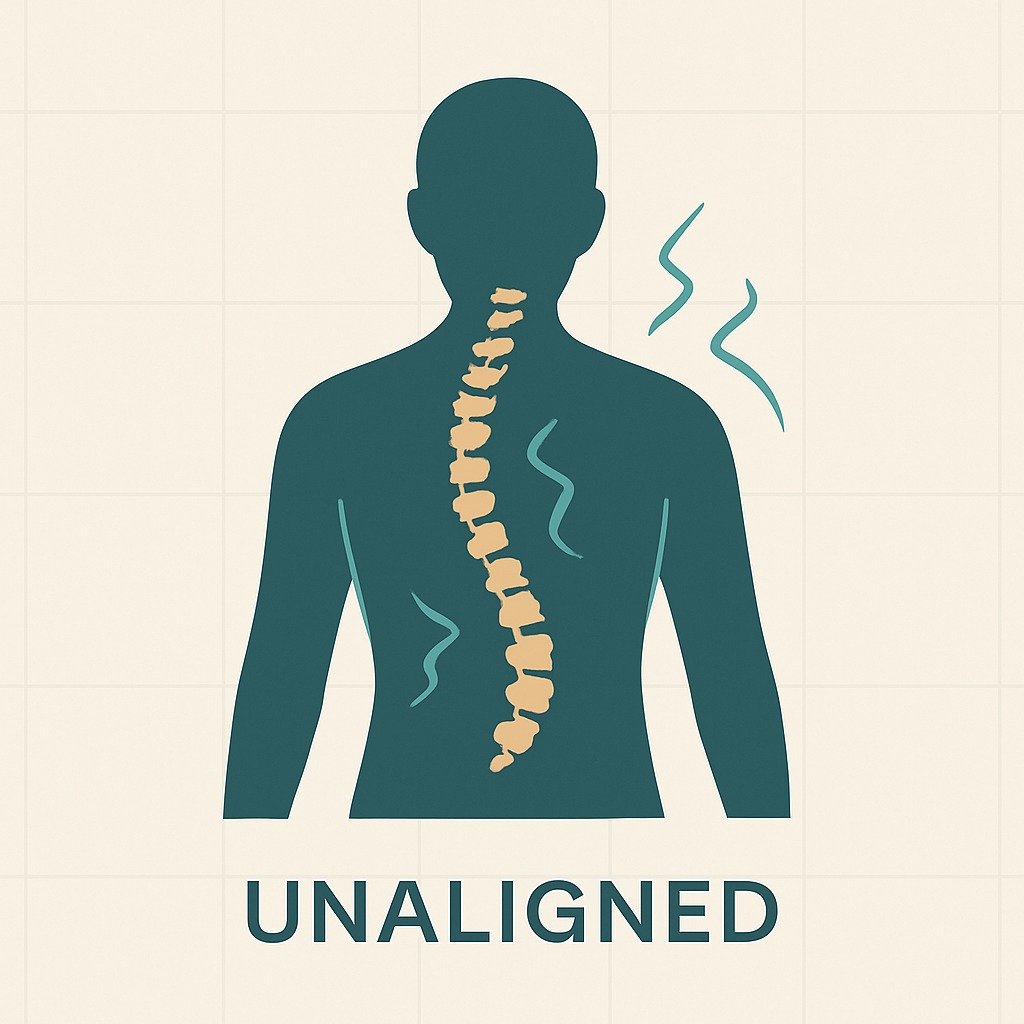
Inactivity is rarely perceived as an active problem. It feels passive, harmless—even deserved. A long day sitting, weeks without exercise, months without intentional movement. Nothing dramatic happens overnight. No injury, no accident, no obvious warning sign.
And yet, something is quietly building.
The human body is not designed for stillness. It is designed for movement as information. When movement is reduced or removed from daily life, the body does not simply “rest.” It adapts—systematically, predictably, and often unfavorably.
This adaptation unfolds across multiple systems at once: nervous, circulatory, muscular, fascial, respiratory, and even digestive. What makes it dangerous is not any single change, but the chain reaction they create together.
Inactivity Is Not Neutral — It Is a Signal
From a biological perspective, the absence of movement is still a stimulus. The nervous system interprets reduced mechanical input as a signal that certain tissues, ranges, and functions are no longer required.
The brain continuously maps the body through sensory feedback—pressure, stretch, joint movement, muscle contraction. When movement decreases:
- Sensory input to the brain reduces
- Motor output becomes less precise
- Protective stiffness increases
This is not dysfunction—it is adaptation.
But adaptation without variability leads to rigidity.
The Nervous System: From Fluid Control to Protective Guarding
Movement nourishes the nervous system. Every joint motion and muscle contraction feeds proprioceptive input—information about position, load, and safety.
With inactivity:
- Proprioceptive input declines
- The nervous system shifts toward protective tone
- Muscles begin to hold low-grade, unconscious tension
This is why people often describe:
- “I feel tight for no reason”
- “My body feels restless but heavy”
- “I can’t relax even when I lie down”
The nervous system is no longer regulating movement efficiently—it is guarding perceived vulnerability.
Circulation: Flow Requires Motion
Blood and lymph circulation are not driven by the heart alone. Muscle contraction acts as a peripheral pump, especially in the lower limbs and deep tissues.
When movement decreases:
- Venous return slows
- Lymphatic drainage becomes sluggish
- Tissue hydration reduces
This leads to:
- Heaviness in limbs
- Cold extremities
- Delayed tissue recovery
- Increased inflammatory byproducts remaining in tissues
Over time, reduced circulation contributes to fatigue, stiffness, and poor tissue resilience.
Muscles: From Dynamic Tissue to Passive Shortening
Muscles are meant to lengthen and shorten repeatedly through full ranges. Without movement:
- Muscles lose excursion capacity
- Certain muscle groups remain shortened
- Others weaken through underuse
This imbalance creates faulty load distribution.
The body does not fail randomly—it compensates intelligently. If hips do not move, the spine moves more. If ankles stiffen, knees absorb extra stress. If thoracic mobility reduces, breathing mechanics shift.
Pain often appears away from the original restriction.
Fascia: The Forgotten Network That Remembers Everything
Fascia is not just wrapping—it is a sensory organ, a force transmitter, and an adaptive matrix. It responds directly to mechanical input.
With limited movement:
- Fascial layers lose glide
- Collagen fibers reorganize chaotically
- Density increases under the skin
This buildup of collagen is not pathological—it is a response to lack of variation. But denser fascia:
- Restricts muscle contraction
- Alters joint mechanics
- Increases compressive load on joints
Movement begins to feel “stuck,” not because muscles are weak, but because tissues are no longer sliding freely.
Joints: Compression Replaces Nutrition
Joints receive nutrition through movement. Synovial fluid circulates only when joints move through load and range.
In inactivity:
- Joint nutrition decreases
- Compressive forces increase
- Cartilage stress rises
This does not immediately cause arthritis—but it creates the environment for degeneration.
People often notice:
- Difficulty standing for long periods
- Reduced walking tolerance
- Stiffness after sitting
These are not aging symptoms—they are movement deprivation symptoms.
Posture Changes Quietly — Then Permanently
When tissues adapt to stillness, posture changes gradually:
- Head drifts forward
- Rib cage collapses
- Pelvis loses neutral alignment
Posture is not a static problem—it reflects how the nervous system organizes gravity. Once posture shifts:
- Breathing mechanics change
- Load distribution alters
- Energy expenditure increases
Standing becomes tiring. Walking becomes inefficient. The body feels heavy even without exertion.
Breathing: The Hidden Link to the Nervous System
Breathing is both mechanical and neurological. Poor posture limits rib expansion and diaphragm excursion.
Shallow breathing patterns:
- Increase sympathetic nervous system tone
- Reduce vagal activity
- Affect digestion, sleep, and emotional regulation
This is why prolonged inactivity often leads to:
- Restlessness
- Anxiety without cause
- Digestive discomfort
- Poor sleep quality
The body is not malfunctioning—it is signaling imbalance.
The Vicious Cycle of Stillness
What makes inactivity dangerous is not just physical stiffness—it is the feedback loop:
Reduced movement
→ Nervous system guarding
→ Tissue stiffness
→ Altered posture
→ Poor breathing
→ Heightened stress response
→ Reduced motivation to move
By the time pain appears, the system has already adapted.
Seeing the Invisible Before It Hurts
The tragedy of inactivity is that its effects are subtle until they are not. The body does not complain loudly—it whispers through stiffness, fatigue, restlessness, and discomfort.
Movement is not exercise alone. It is nourishment. It is communication. It is how the body maintains internal coherence.
The absence of movement does not mean the body is resting—it means it is reorganizing itself for survival, often at the cost of comfort and efficiency.
And once you understand this, pain stops being mysterious. It becomes predictable—and preventable.