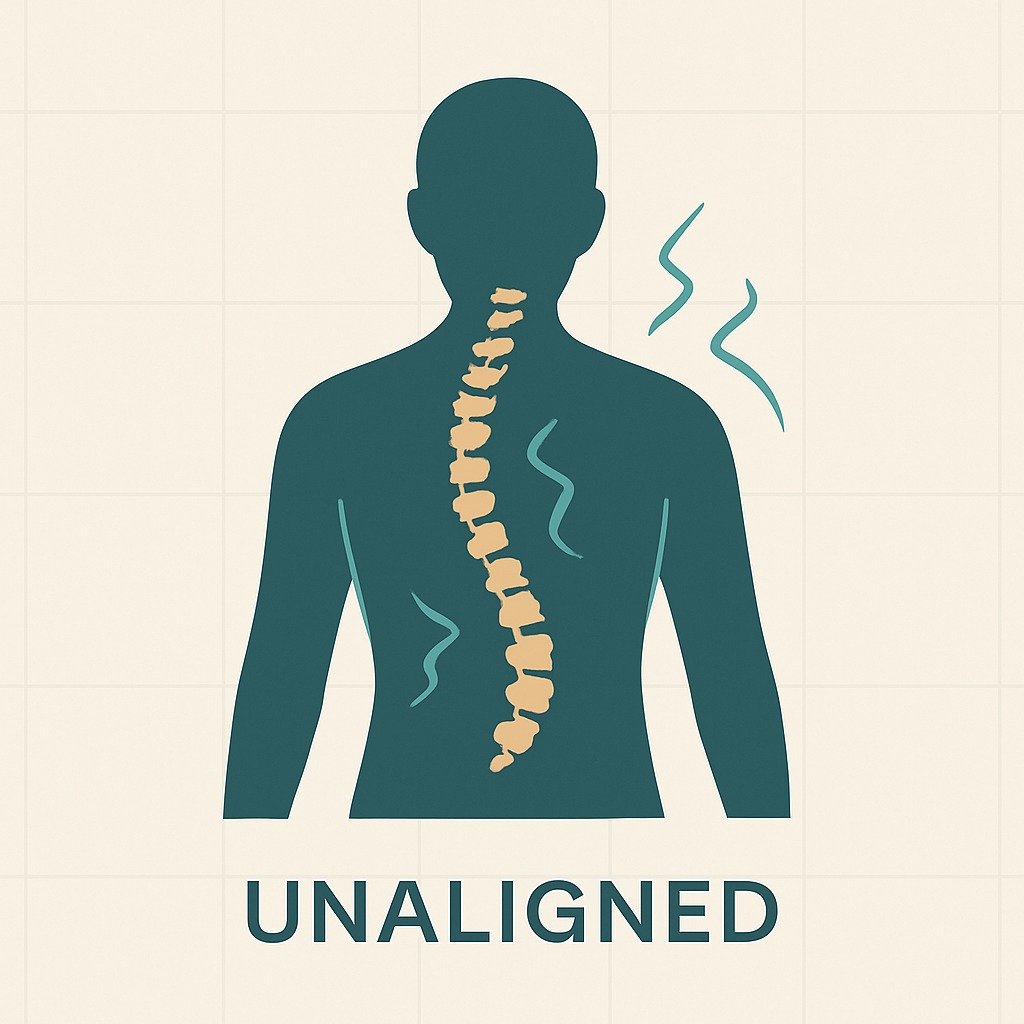
Most people believe the body “just moves.”
Walking happens. Sitting happens. Breathing happens. Pain happens.
What is rarely understood is that movement is not automatic—it is biologically negotiated, moment by moment, at the cellular level. Every step, every posture, every breath is the outcome of millions of microscopic decisions happening inside the body.
Modern life has not injured us dramatically.
It has rewritten the rules silently.
Biomechanics: Not Just Movement, But Intelligent Load Management
Biomechanics is not about exercise science alone. It is the study of how biological tissues manage force, gravity, and energy.
Every human body is designed to:
- Distribute load efficiently
- Absorb shock through joints and soft tissues
- Convert chemical energy into mechanical action
When biomechanics is healthy, movement feels effortless. When biomechanics is compromised, the body compensates—quietly at first, painfully later.
The tragedy is that most people never learn that biomechanics exists. They assume movement is mechanical, not biological.
But movement is alive.
The Cell: The Smallest Unit That Decides Everything
To understand the human body, one must first understand the cell.
Every cell in your body contains:
- A membrane regulating exchange
- A nucleus holding genetic instructions
- Mitochondria producing ATP (energy currency)
- Enzymatic systems driving metabolism
- Structural proteins giving shape and resilience
Movement does not begin in muscles—it begins in cellular energy availability.
ATP is not abstract. It is the fuel that allows:
- Muscle fibers to contract and relax
- Nerves to transmit signals
- Fascia to maintain elasticity
- Tissues to repair and regenerate
If cellular metabolism is inefficient, biomechanics cannot be efficient.
Energy, Load, and the Cost of Modern Stillness
Modern life reduces biological demand while increasing mechanical stress.
We sit for hours. We stare forward. We breathe shallowly. We move in narrow ranges.
The body adapts by:
- Reducing mitochondrial efficiency
- Conserving energy through stiffness
- Prioritizing survival over movement quality
This is why fatigue and stiffness coexist.
Energy production drops, yet tension increases.
It is not laziness—it is metabolic strategy.
Fascia: The Tissue That Remembers How You Live
Fascia responds directly to mechanical and chemical environments.
When movement is varied:
- Fascia remains hydrated
- Collagen fibers align optimally
- Force transmission remains elastic
When movement is repetitive or absent:
- Fascia dehydrates
- Collagen densifies
- Sliding surfaces stick
This is not injury—it is adaptation.
Modern life provides:
- Prolonged compression
- Reduced shear forces
- Limited rotational movement
The fascial system reorganizes accordingly, making the body efficient for sitting—but inefficient for living.
Joints Do Not Wear Out — They Dehydrate
Joints depend on movement for nourishment. Synovial fluid circulation occurs only through motion.
Without movement:
- Cartilage receives less nutrition
- Joint surfaces experience increased friction
- Shock absorption capacity reduces
Pain is often blamed on “aging,” but degeneration accelerates when joints stop being fed by motion.
Why Traditional Practices Understood What Modern Science Is Rediscovering
Ancient traditions did not speak in terms of ATP or collagen—but they observed effects accurately.
Oil pulling. Abhyanga (oil massage). Warm compressions. Daily movement rituals.
These practices:
- Improve tissue hydration
- Enhance sensory feedback to the nervous system
- Reduce friction between fascial layers
- Support parasympathetic activation
Oil does not magically heal tissues—but it changes the mechanical environment of the skin and fascia. It improves glide, reduces resistance, and enhances proprioceptive input.
Lubricated tissues move differently.
And movement changes biology.
Touch as a Biological Signal
Touch is not psychological—it is neurological and cellular.
Manual therapies stimulate:
- Mechanoreceptors
- Interstitial fluid movement
- Local circulation
- Nervous system recalibration
This is why touch-based therapies often create systemic effects—calmness, warmth, improved digestion—not just local relief.
The body responds to context, not isolated inputs.
The Therapist’s Responsibility: Seeing the Invisible
As therapists, we do not expect everyone to understand mitochondria or fascia.
But it is our responsibility to:
- See movement as metabolism
- See stiffness as energy conservation
- See pain as system overload
Modern life does not break bodies.
It conditions them for stillness, and then punishes them for trying to move again.
Healing, therefore, is not about correction alone—it is about reintroducing forgotten biological conversations.
Movement Is Cellular Education
Every movement teaches cells how much energy to produce, how much force to tolerate, and how much repair is required.
When movement disappears, cells downregulate.
When movement returns intelligently, cells remember.
This is not fitness.
This is biological literacy.
And once you understand this, you stop treating the body as a machine—and start respecting it as a living, adapting system.