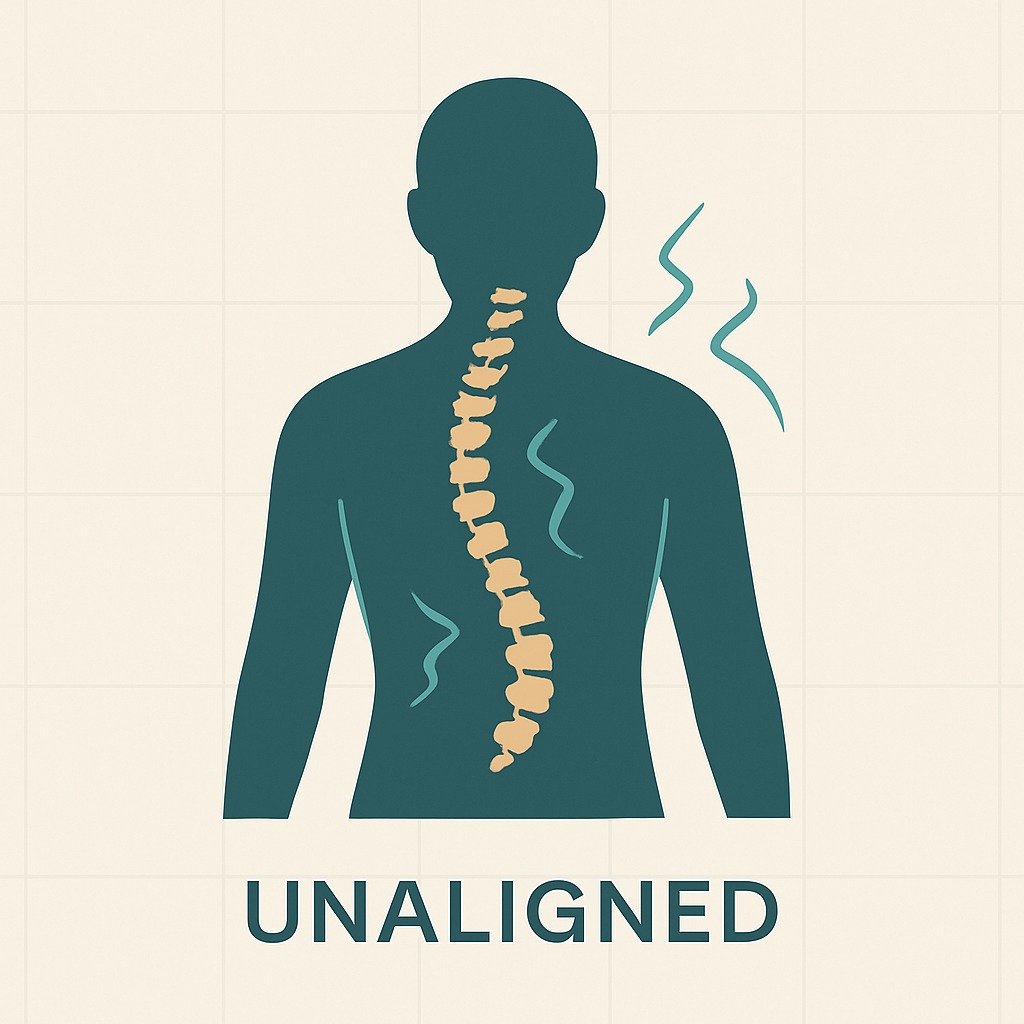
Most people seek therapy because something hurts.
A shoulder that no longer lifts freely. A back that tightens every morning. A neck that refuses to relax.
Pain becomes the entry point—but pain is rarely the origin.
Effective therapy does not begin with treatment. It begins with understanding.
Education Before Intervention: Why Pain Exists
The first step we take is not manual work—it is education.
When a person understands why pain is present, the nervous system immediately shifts. Fear reduces. Guarding softens. The body becomes receptive.
Pain is not random. It is the body’s language for imbalance.
Treating symptoms without understanding causes is like silencing an alarm without addressing the fire.
The Root Begins in the Gut–Brain Axis
Every chronic dysfunction has a regulatory component, and regulation begins in the gut.
The gut:
- Produces neurotransmitters
- Modulates immune activity
- Influences systemic inflammation
- Communicates continuously with the brain
When gut-brain balance is disturbed:
- Muscle tone becomes dysregulated
- Recovery slows
- Pain sensitivity increases
Restoring rhythm here means:
- Improving digestion and absorption
- Reducing inflammatory signaling
- Stabilizing nervous system tone
Without this foundation, physical correction does not hold.
Muscle–Body Balance: Reintroducing Coordination
Once internal regulation improves, attention shifts to how the body uses itself. Muscles do not fail in isolation—they lose coordination.
Chronic stress and immobility create:
- Overactive muscles
- Inhibited stabilizers
- Compensatory movement patterns
Therapeutic movement and manual input help:
- Restore normal length–tension relationships
- Improve load sharing
- Reduce unnecessary effort
The body begins to move economically again.
Mind–Body Connection: Restoring Sensory Awareness
Pain disconnects awareness.
People stop feeling their bodies clearly—they brace, avoid, or dissociate.
Therapy restores:
- Proprioception
- Interoception
- Trust in movement
As awareness returns, movement quality improves automatically.
This is not mental—it is neurological.
Fascia: Rehydrating the Communication Network
Fascia holds memory—not emotional memory, but mechanical memory.
Chronic tension densifies fascia.
Restricted fascia alters force transmission.
Therapeutic work restores:
- Tissue hydration
- Layer glide
- Elastic recoil
This reduces load on joints and nerves.
Movement feels smoother—not because strength increased, but because resistance decreased.
Nervous System Regulation: Where Real Healing Occurs
Pain is not produced by tissues—it is interpreted by the nervous system.
Without regulation:
- Trigger points persist
- Pain thresholds drop
- Healing slows
Therapeutic touch, breath integration, and pacing:
- Reduce sympathetic dominance
- Improve vagal tone
- Normalize sensory processing
This is why relief often feels global, not local.
Trigger Points and Pain: Addressing the Expression, Not the Cause
Trigger points are expressions of overload—not defects.
They develop when:
- Circulation is poor
- Neural input is excessive
- Movement options are limited
Releasing them without restoring rhythm leads to recurrence.
When rhythm is restored, trigger points resolve naturally.
Alignment and Adjustment: The Final Layer
Structural alignment is not the first step—it is the last.
Adjustments and alignment work succeed only when:
- Muscles can support posture
- Fascia can adapt
- Nervous system can integrate
Otherwise, corrections fade quickly.
Alignment holds when the system is ready.
Therapy as Rhythm Restoration, Not Repair
True therapy does not “fix” the body.
It:
- Restores communication
- Reestablishes timing
- Reintroduces adaptability
Pain fades not because it was removed, but because it is no longer required.
Healing Is Sequential, Not Aggressive
The body heals in layers:
- Regulation
- Coordination
- Mobility
- Stability
- Integration
Skipping steps leads to relapse.
Respecting sequence leads to resilience.
The Goal Is Independence, Not Dependency
Therapy should make the body less dependent on therapy.
When rhythm is restored:
- Movement becomes intuitive
- Recovery becomes natural
- Pain becomes unnecessary
This is not treatment—it is re-education.
Rhythm Is the Language the Body Understands
The body does not respond to force.
It responds to rhythm, timing, and safety.
Therapeutic interventions work when they speak that language.
And when rhythm returns, health follows—not dramatically, but quietly, sustainably, and deeply.