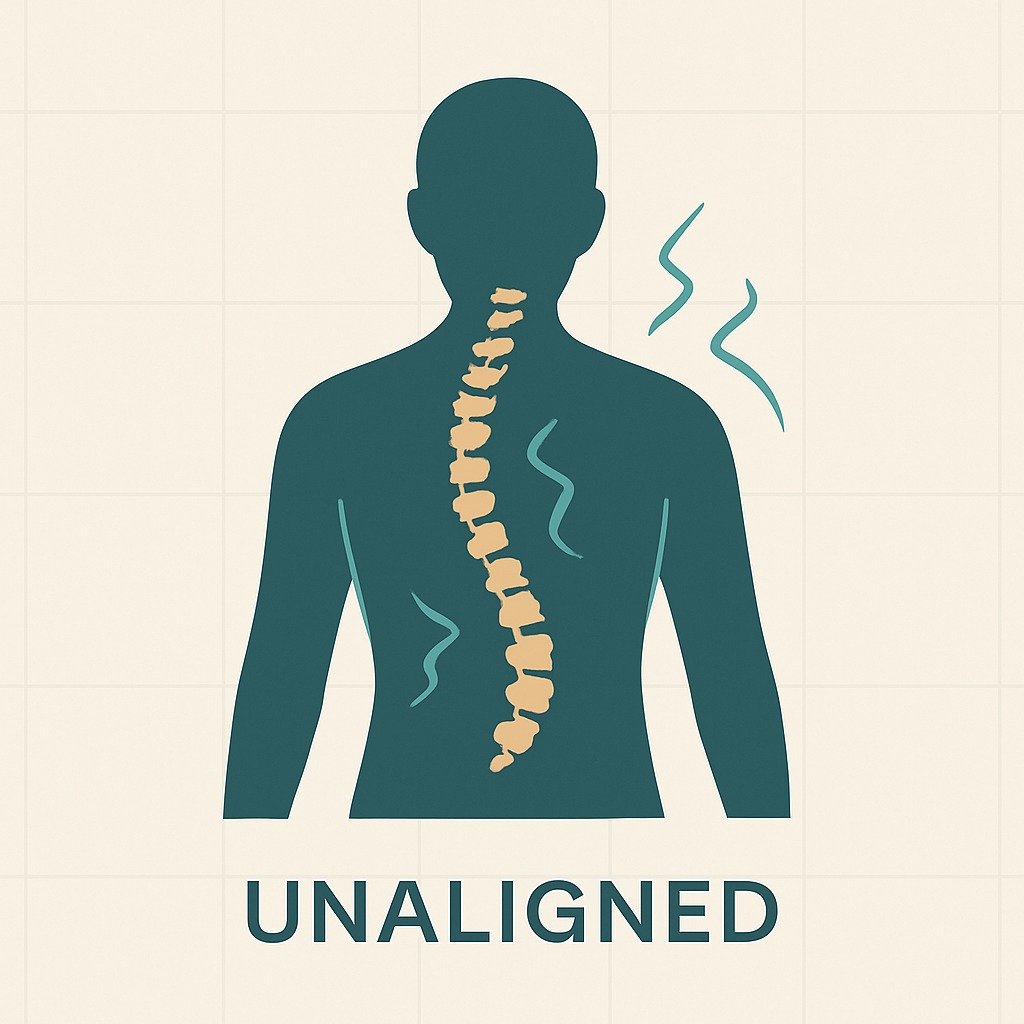
Modern stress is often blamed directly for hormonal imbalance. This is only partially true—and dangerously misleading.
Stress does not attack the endocrine system first.
It breaks rhythm.
And when rhythm is lost, hormones lose their timing, metabolism loses efficiency, and physiology loses coherence.
Circadian Rhythm: The Master Regulator We Ignore
The human body evolved around predictable cycles:
- Light and darkness
- Activity and rest
- Feeding and fasting
- Wakefulness and sleep
Circadian rhythm governs when hormones are released—not just how much.
Cortisol, insulin, melatonin, thyroid hormones, sex hormones—all follow time-sensitive patterns. When these patterns are disturbed, secretion becomes erratic even if glandular capacity remains intact.
Modern stress disrupts when biology happens.
Stress as Repetition, Not Intensity
The problem is not acute stress.
The body is designed for that.
The problem is repetitive, unresolved stress combined with immobility.
- Long work hours
- Artificial lighting late at night
- Screens replacing sunsets
- Mental overdrive without physical discharge
- No transition between effort and rest
The nervous system never completes a stress cycle.
The body remains on without resolution.
This is not productivity—it is physiological confusion.
Endocrine System Reflects Metabolism, Not Willpower
The endocrine system is a mirror of metabolic state.
When circadian rhythm is disrupted:
- Cortisol remains elevated at night
- Insulin sensitivity declines
- Thyroid conversion efficiency drops
- Sex hormone synthesis becomes inconsistent
This explains why modern endocrine disorders cluster together.
Not randomly—but predictably.
Why Type 2 Diabetes Is a Rhythm Disorder
Type 2 diabetes is often framed as a dietary failure. In reality, it is largely a timing failure.
Late meals, poor sleep, chronic stress:
- Keep blood glucose elevated
- Impair insulin signaling
- Reduce glucose uptake by muscle
The body shifts toward storage rather than utilization.
Glucose is present.
Cells cannot access it efficiently.
Energy becomes abundant yet unavailable.
Thyroid Dysfunction: Not Just a Gland Problem
The thyroid does not operate in isolation.
Its output depends on:
- Cortisol rhythm
- Liver conversion (T4 to T3)
- Mitochondrial efficiency
Disrupted circadian rhythm:
- Blunts morning cortisol rise
- Impairs thyroid hormone activation
- Reduces basal metabolic rate
Symptoms follow:
- Fatigue
- Cold intolerance
- Weight gain
- Brain fog
The gland is blamed—but the clock is broken.
Sex Hormones and the Cost of Constant Alertness
Chronic circadian disruption affects reproductive hormones profoundly.
In men:
- Testosterone synthesis declines
- Muscle recovery slows
- Libido decreases
In women:
- Estrogen-progesterone balance shifts
- Progesterone often rises relative to estrogen
- Cycles become irregular or symptomatic
These changes are not moral failures or age alone—they are adaptive responses to stress physiology.
The body deprioritizes reproduction when survival signals dominate.
From Endocrine to Circulatory to Excretory
Once metabolism destabilizes, downstream systems suffer.
Circulatory System:
- Poor glucose utilization damages vessels
- Blood viscosity increases
- Microcirculation deteriorates
Excretory System:
- Kidney filtration efficiency reduces
- Electrolyte balance destabilizes
- Waste clearance slows
Fatigue deepens. Swelling appears. Recovery slows.
The cascade is systemic.
Stress as a Marketed Virtue
Here lies the most uncomfortable truth.
What we call “stress” today is often marketed as:
- Hustle
- Ambition
- Success
- Discipline
Late nights are praised.
Sleep deprivation is normalized.
Stillness is seen as laziness.
We celebrate behaviors that biologically resemble chronic threat exposure.
And then we wonder why disease follows.
The Body Is Not Failing — It Is Adapting
Endocrine disorders are not betrayals.
They are intelligent adaptations to an incoherent environment.
The body is adjusting to:
- Artificial time
- Artificial light
- Artificial urgency
When rhythm is restored, balance becomes possible again.
Restoration Is Rhythmic, Not Aggressive
Healing does not begin with forcing hormones back into range.
It begins with:
- Regular sleep-wake cycles
- Daytime movement
- Evening nervous system downregulation
- Respect for biological timing
The endocrine system heals when the clock is honored.
We Are Buying the Narrative — And Paying With Biology
Modern stress is not accidental.
It is normalized.
It is rewarded.
But the body does not negotiate with narratives.
It responds to rhythm.
And until we stop confusing exhaustion with achievement, imbalance will continue to rise—quietly, predictably, and collectively.