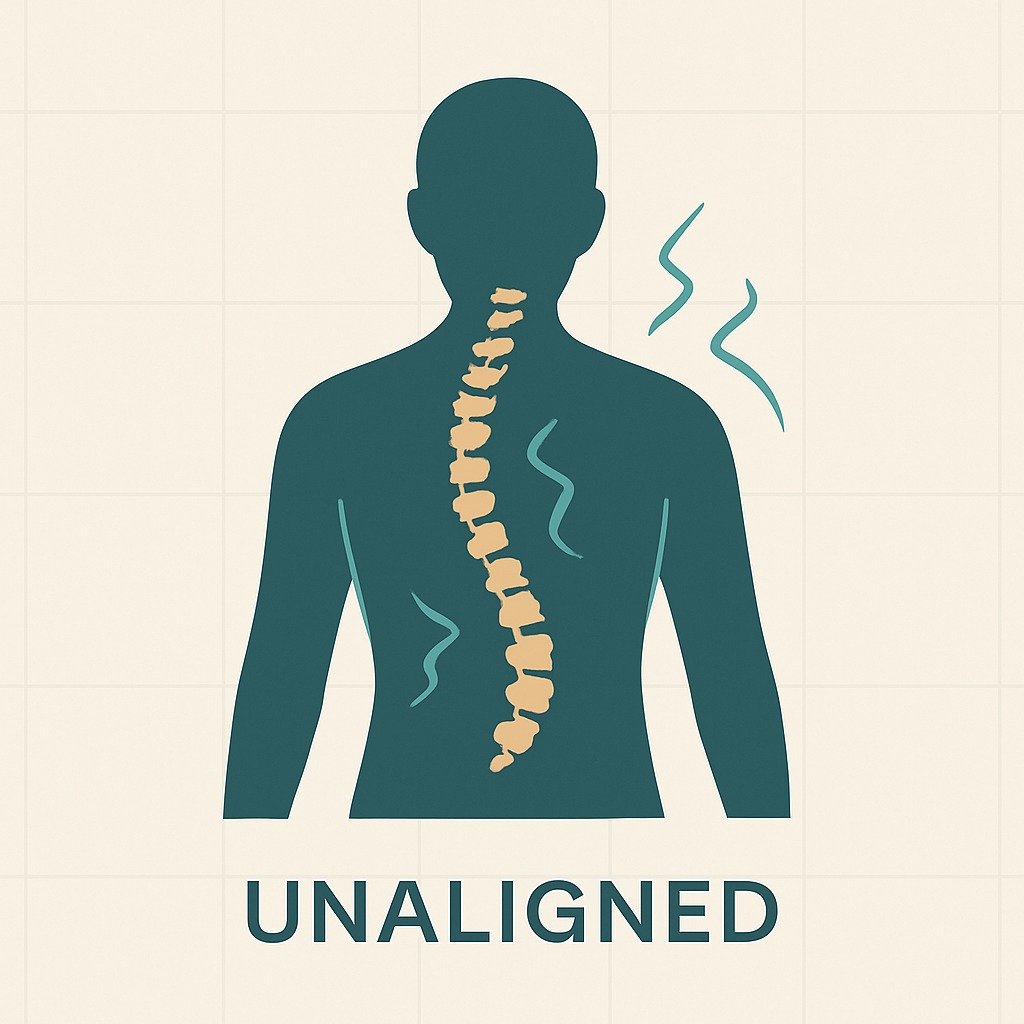
Movement, when guided correctly, does far more than strengthen muscles or burn calories.
It reorganizes the nervous system.
And when the nervous system reorganizes, hormones follow.
This is a distinction modern fitness culture often overlooks, but classical yoga understood deeply.
When we move according to the principles embodied in āsana, we are not merely training the physical body—we are educating regulation.
Asana Is Neurological Training, Not Just Physical Conditioning
Yoga āsanas are frequently mistaken for stretching routines or alternative exercises. In reality, they are neuro-sensory practices designed to influence:
- Autonomic nervous system balance
- Endocrine gland signaling
- Respiratory efficiency
- Metabolic economy
Each posture places the body in a specific spatial relationship with gravity, breath, and awareness. This combination directly affects neural tone.
The body is not being forced—it is being guided.
Breath and Movement: A Regulatory Pair
In yoga, movement is inseparable from breath. This coupling is critical.
When movement is synchronized with slow, controlled breathing:
- Respiration rate decreases
- Metabolic demand reduces
- Oxygen utilization becomes more efficient
- Carbon dioxide tolerance improves
This environment favors parasympathetic dominance, which is essential for hormonal balance.
Hormones do not stabilize under stress—they stabilize under regulation.
The Central Channel and Nervous System Coherence
Classical yogic texts describe Suṣumṇā Nāḍī as the central pathway through which balance is restored. From a modern perspective, this can be understood as central nervous system coherence.
When posture, breath, and attention align:
- Spinal reflex activity normalizes
- Brainstem regulation improves
- Cortical overactivity reduces
Energy is no longer scattered.
Signals become coherent.
This coherence is what allows endocrine glands to function rhythmically rather than reactively.
Asana vs Exercise: A Fundamental Difference
Exercise and āsana both stress the body—but in profoundly different ways.
Exercise:
- Increases heart rate
- Raises metabolic demand
- Elevates oxygen consumption
- Promotes catabolism (breakdown)
This stress is beneficial when applied appropriately. Without exercise:
- Muscles atrophy
- Bone density decreases
- Oxygen utilization declines
- Insulin resistance increases
Exercise prepares the body to meet external demands.
Asana:
- Slows respiration
- Reduces metabolic rate
- Lowers oxygen consumption
- Stabilizes body temperature
Asanas are designed to arrest excessive catabolism, conserving energy while redistributing it intelligently.
They prepare the body for internal regulation.
Hormones Respond to Context, Not Force
Hormonal glands—thyroid, adrenals, pancreas, pituitary—do not respond well to chronic stress signals.
Under constant sympathetic activation:
- Cortisol remains elevated
- Insulin signaling becomes erratic
- Thyroid conversion efficiency drops
- Sex hormone balance destabilizes
Asana and pranayama change the context in which hormones are secreted.
They shift the internal environment from urgency to rhythm.
The Role of Pranic Channels and Organ Stimulation
From a yogic lens, āsanas:
- Stretch and stimulate pranic channels
- Massage internal organs
- Improve visceral circulation
From a physiological lens, they:
- Improve blood and lymph flow
- Enhance organ mobility
- Reduce mechanical compression
Both perspectives describe the same outcome: improved internal communication.
When organs move well, they function well.
Electrochemical Calm in the Nervous System
One of the least discussed effects of asana is its influence on electrochemical activity in the nervous system.
Slow, held postures combined with breath awareness:
- Reduce excessive neural firing
- Improve signal clarity
- Enhance vagal tone
This is why consistent practice often leads to:
- Improved sleep
- Better digestion
- Emotional stability
- Steady energy levels
These are hormonal effects—not psychological ones.
Yoga as a Complement, Not a Replacement
Yoga āsana is not meant to replace exercise—it complements it.
Exercise builds capacity.
Asana restores coherence.
Together, they create resilience.
But when exercise dominates without regulation, the system burns out.
And when regulation exists without movement, capacity diminishes.
Balance is the key.
Awareness Is the Active Ingredient
What differentiates yoga from movement is awareness.
Awareness allows:
- Muscles to release unnecessary tone
- Breath to deepen naturally
- Nervous system to recalibrate
The posture is the doorway.
Awareness is the transformation.
Hormonal Balance Is an Emergent Property
Hormonal balance cannot be forced with supplements, routines, or isolated interventions.
It emerges when:
- Breath is free
- Posture is aligned
- Nervous system feels safe
- Movement is intelligent
Yoga, when practiced correctly, creates these conditions.
Not by pushing—but by listening.